
The Thing on the Doorstep
Overview
“The Thing on the Doorstep” is a weird horror short story by American writer H. P. Lovecraft, associated with the Cthulhu Mythos. Lovecraft wrote it in August 1933, and it first appeared in the January 1937 issue of Weird Tales. The story brings together his recurring New England settings, forbidden lore, and supernatural dread, but its central horror is intimate: the possibility that a person’s mind, body, and identity can be separated and controlled by another consciousness.
The narrator, Daniel Upton, begins with a startling confession: he has killed his longtime friend Edward Derby. He then recounts their friendship in an effort to explain what led him to that act. Derby was an intelligent, sensitive man drawn to poetry, fantasy, and occult learning, but poorly equipped for the demands of ordinary life. As an adult he marries Asenath Waite, a woman from Innsmouth who possesses unusual knowledge and appears capable of affecting other people’s minds. After the marriage, Derby’s behavior changes by degrees. At times he seems forceful and unfamiliar; at others, he appears frightened and estranged from his own life. Upton struggles to decide whether his friend is ill, afraid, or under the influence of sorcery. Eventually, the signs point to a deeper violation: the body and the consciousness inhabiting it may no longer belong together.
Upton finally takes lethal action, believing that he is stopping a terrible presence that has occupied his friend’s body. The killing does not resolve the mystery. A degraded, nearly corpse-like figure comes to his doorstep, revealing that Derby’s fate is more complicated than Upton understood. The threshold in the title is both a physical place and an apt image for the boundary between the living and the dead, the familiar and the alien, and one identity and another. By framing the narrative as a retrospective confession, Lovecraft lets the reader follow Upton’s gradual movement from loyalty and doubt toward horror.
Themes and composition
The story asks whether the self can exist apart from the body, and whether anyone can be certain of personal identity when consciousness might be transferred or invaded. Its treatment of bodily autonomy gives the supernatural plot a disturbing personal dimension. Marriage becomes a setting in which intimacy and dependence can turn into vulnerability and domination, rather than a refuge from danger. The story also explores the perilous attraction of forbidden knowledge: occult learning offers power, but its consequences exceed the understanding of those who encounter it. Upton’s narration adds another layer of uncertainty. He cares for Derby, yet can only reconstruct events afterward from incomplete and frightening evidence; readers must interpret the same clues alongside him.
The inspiration reportedly came from a dream Lovecraft recorded in 1928, involving a man influenced by a terrible wizard friend and a later act of killing. He did not turn that brief premise into the finished story until 1933. The tale also draws on the connected fictional geography and lore that recur across his writing, including Arkham, Miskatonic University, and Innsmouth. These references give the story a place within a shared imaginative world, while its tightly focused plot remains accessible on its own.
Reception and legacy
“The Thing on the Doorstep” is notable for making a complicated supernatural premise into a steadily unfolding personal mystery. Rather than relying only on the spectacle of a monster, it builds dread from the possibility that someone familiar has been displaced from within, and that a recognizable body may conceal an alien will. The story continues to invite discussion of consciousness, personality, bodily control, and the limits of what a narrator can know. It is commonly encountered in Lovecraft collections and in editions of his weird fiction. Its standing is also connected to the wider afterlife of Lovecraft’s work: his reputation grew substantially after his death, and the loosely connected Mythos became an influential shared tradition in later horror and popular culture.
About the Author
Early life and education
Howard Phillips Lovecraft was born in Providence, Rhode Island, on August 20, 1890, and died there on March 15, 1937, aged 46. He grew up in a New England family whose fortunes declined during his childhood. His father, Winfield Scott Lovecraft, was hospitalized for mental illness when Howard was young and died in 1898. His mother, Sarah Susan Phillips Lovecraft, and other relatives helped raise him; his maternal grandfather, Whipple Van Buren Phillips, was an especially important presence and introduced him to Gothic literature. Lovecraft was often in poor health and had an irregular formal education. He read widely on his own, developing early interests in science, astronomy, history, and literature.
The death of his grandfather in 1904 was followed by financial hardship and a move from the family home. Lovecraft did not complete his schooling and never entered Brown University, which he had hoped to attend. This frustrated ambition weighed on him. For a time he lived in relative seclusion, devoting himself to reading, poetry, and astronomical observation. In 1914 he joined the United Amateur Press Association, an experience that brought him into a wider circle of writers and editors. Around 1917 he began producing the weird fiction for which he became known, while also writing poetry and criticism and doing editorial revision and ghostwriting.
Work and literary ideas
Lovecraft combined Gothic horror with scientific speculation, invented documents, and elaborate fictional histories. He described the outlook behind much of his work as “cosmicism”: human beings have limited powers of understanding, and the universe is neither centered on humanity nor governed by human moral expectations. In his fiction, encounters with realities beyond ordinary comprehension undermine the characters’ confidence in their place in the world. Stories with overlapping settings, invented books, and recurring nonhuman entities gradually formed the body of material later known as the Cthulhu Mythos. From 1923 onward, many of his stories appeared in Weird Tales. He nevertheless achieved limited recognition during his lifetime and had an unstable income, relying at times on ghostwriting and rewriting for other writers.
Among his best-known works are “The Call of Cthulhu,” written in 1926 and published in 1928; “The Colour Out of Space,” published in 1927; “The Dunwich Horror,” published in 1929; and “At the Mountains of Madness” and “The Shadow over Innsmouth,” both published in 1936. “The Thing on the Doorstep,” written in 1933, appeared in 1937. Across these works he repeatedly explored human vulnerability before forces too vast or strange to comprehend, and developed a narrative style that often assembles horror through testimony, letters, rumors, and purported records. His immense correspondence was another significant part of his literary life, sustaining relationships and exchanges of ideas with writers and enthusiasts.
Lovecraft married Sonia Greene in 1924. The marriage later ended, and they separated in 1929. He spent a period in New York before returning to Providence. Poor health and financial difficulty marked his later years. Diagnosed with intestinal cancer in 1936, he died in Providence the following year, on March 15.
Reputation and legacy
During his lifetime, Lovecraft was best known within the circles of readers and writers of weird fiction. His reputation expanded after his death through reprints, collections, and literary study. He is now regarded as one of the significant horror writers of the twentieth century. His cosmic scale of terror, interconnected invented lore, and distinctive methods of narration have influenced later fiction and inspired adaptations across film, games, and other arts. The Cthulhu Mythos became a shared imaginative tradition that later creators could extend and reinterpret, rather than a body of lore confined to its original author. His legacy also requires attention to his explicitly racist views, which have been the subject of continuing criticism and debate. Readers and scholars continue to consider how to acknowledge those views while assessing the reach and importance of his fiction.
StoryFlow
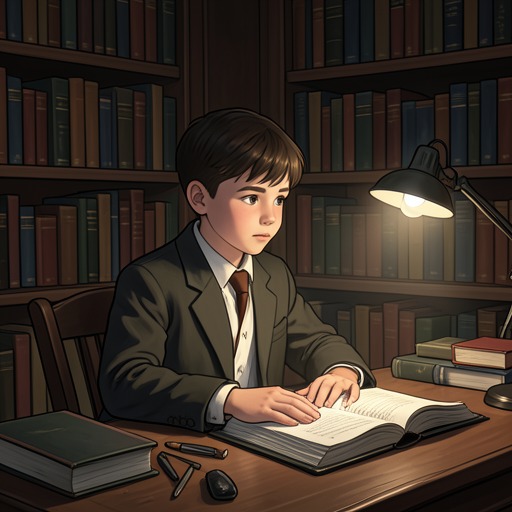
Derby's Bookish Formation
This thread traces how Edward Pickman Derby's sheltered childhood, literary achievement, and occult scholarship shaped his distinctive dependence on other people and his attraction to forbidden knowledge.
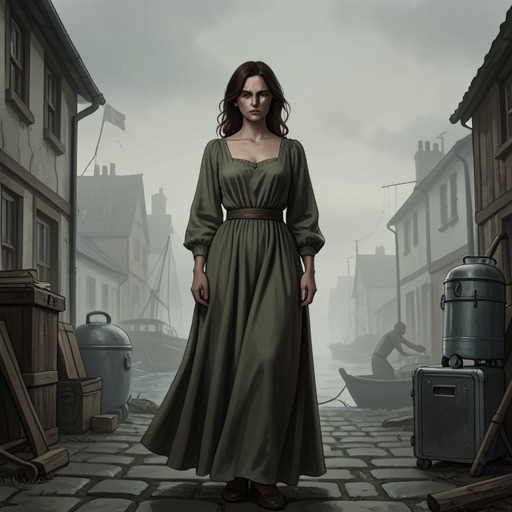
Asenath's Reputation and Origins
This thread follows the rumors and reported abilities surrounding Asenath Waite, from her Innsmouth ancestry and father's occult legacy to the fearful presence she establishes in Arkham.
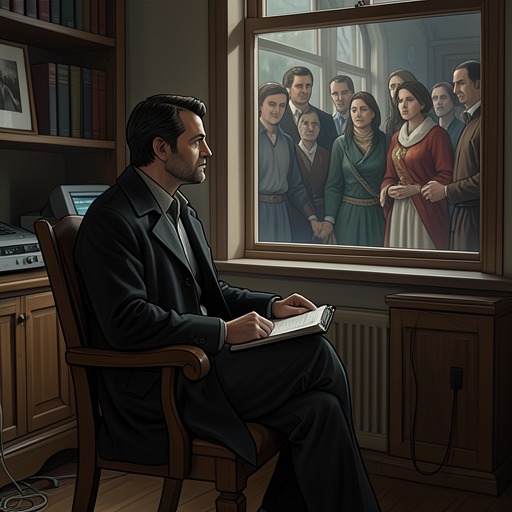
Upton as Observer and Interpreter
This thread traces Daniel Upton's changing role from lifelong friend and rational observer to the person who must interpret fragmentary warnings and act on a terrible conclusion.
